


Accountancy courses enhance financial literacy, which leads to smarter money decisions in daily life. An accountancy qualification develops skills that apply across industries, which boost career versatility.
Key Takeaways:
- Gaining accountancy knowledge equips professionals with confidence to make informed decisions that positively influence business outcomes and daily work responsibilities.
- Understanding financial principles enhances problem-solving and analytical thinking, allowing individuals to approach challenges strategically across various roles and industries.
- Developing financial awareness improves communication, accountability, and career adaptability, making professionals more effective contributors in both organisational and personal contexts.
Accountancy courses provide a practical understanding of how money moves within a business. In most senior roles, decisions involve budgets, costs or performance, yet many professionals lack basic financial knowledge. This gap often limits confidence and slows career progression.
Having a basic qualification in accountancy helps in interpreting a simple report, managing a budget or understanding profitability. You will be able to make informed and smart business decisions. These skills can be applied across management, operations, administration and even entrepreneurship, along with the financial roles.
For many professionals, learning accountancy is more about strengthening their current role rather than about changing careers. It improves clarity, supports better communication with finance teams and adds measurable value to your work. In a workplace where financial awareness is increasingly expected, this knowledge can quietly set you apart.
Overview of Accountancy Training
Accountancy qualifications are structured programmes that are designed to help learners understand how the financial system operates within a business. It covers all the core areas such as bookkeeping, financial reporting and budgeting. Learners gain practical knowledge of recording financial transactions, preparing basic financial statements and managing income and expenditure effectively.
The structure and depth of learning vary depending on the different levels of qualifications. Entry-level qualifications provide an understanding of basic accountancy, while advanced qualifications prepare learners to become a qualified accountant, offering a more comprehensive understanding of accounting principles and practices. These professional training courses are more detailed, take longer to complete and are often recognised by employers for career progression.
Types of Accountancy Courses Available in the UK
In the UK, accountancy courses are available at different levels to suit varying experience and career goals. Entry-level courses, such as Level 1 and Level 2, introduce fundamental concepts and are suitable for beginners or those with no prior accounting experience. These courses focus on basic financial tasks and terminology.
Intermediate and advanced qualifications, including Level 3 and Level 4, build on the accountancy foundation. They cover more complex topics such as financial analysis, principles of financial accounting, recording financial transactions, maintaining financial records and management accounting. These levels are suitable for individuals who want to deepen their knowledge.
Level 5, Level 6 and Level 7 accountancy diplomas are professional-level qualifications that focus on start-ups, strategic financial management, investment analysis or auditing.
Why Financial Knowledge Matters Even If You Are Not an Accountant?
Financial knowledge is no longer limited to finance departments. In most roles, decisions involve costs, budgets, financial analysis, or performance targets. Professionals can evaluate impact, justify decisions and contribute meaningfully to organisational goals with a basic understanding of the financial principles.
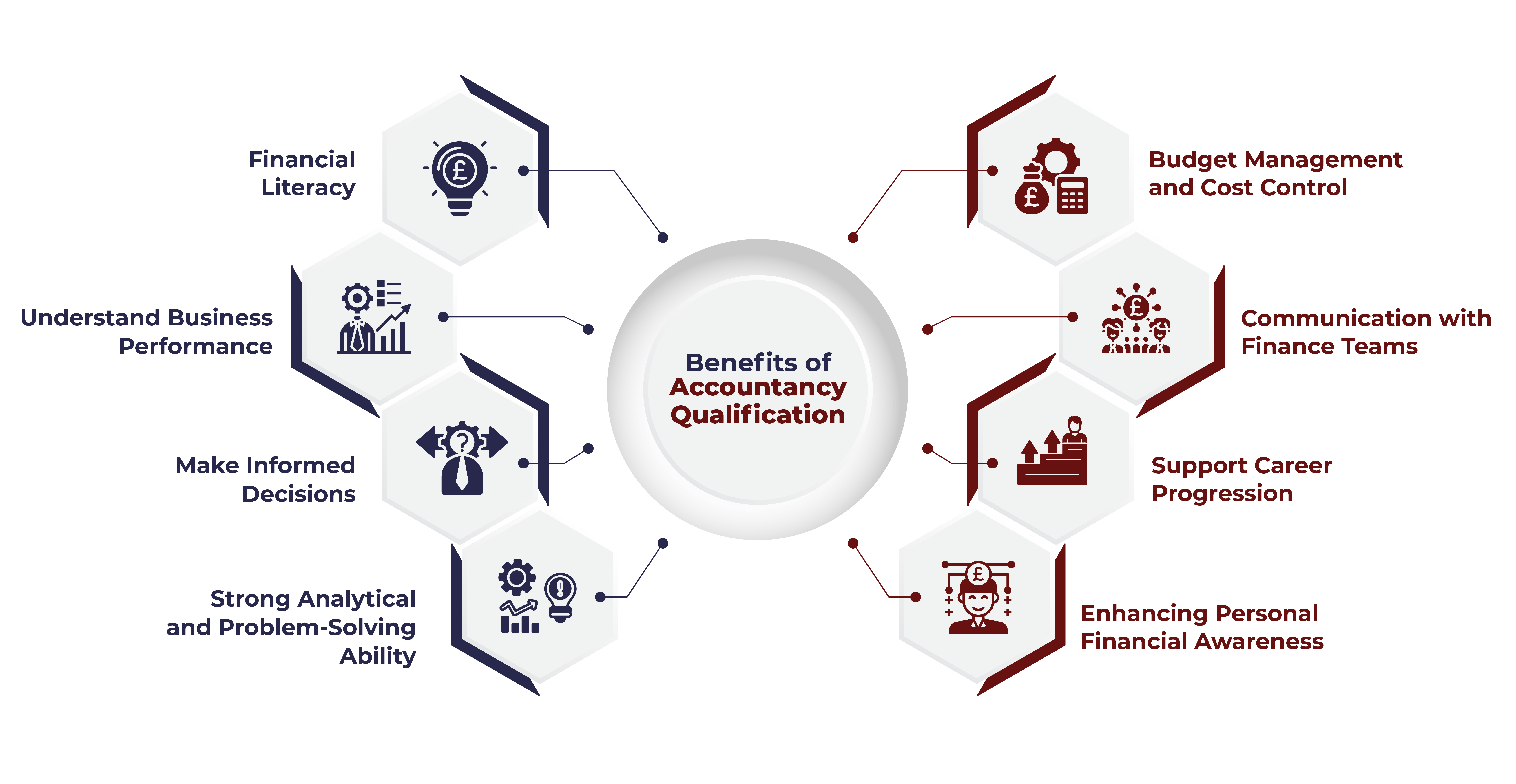
Financial knowledge is important for financial literacy, understanding business performance, making informed decisions, managing budgets, controlling costs, improving communication, advancing career progression, and increasing financial awareness.
Financial Literacy
Studying accountancy builds your ability to understand financial data, budgets and reports. This helps you make sense of how money flows within an organisation and how your role contributes to overall performance. Financial literacy allows you to work with more clarity and confidence in day-to-day tasks.
Understand Business Performance
Financial knowledge helps you interpret how a business is performing. By understanding basic reports such as profit and loss statements and cash flow summaries, you can see where money is generated and where it is spent. This awareness allows you to connect your role to overall organisational outcomes.
Make Informed Decisions
Every day decisions often have financial consequences. Financial knowledge ensures that you analyse the cost, value, and return when approving a purchase, planning a project, or allocating resources. This reduces the risk of poor judgment and supports more responsible decision-making.
Strong Analytical and Problem-Solving Ability
Accountancy develops structured thinking. You learn how to interpret figures, identify trends and recognise inefficiencies. These analytical skills help you approach problems logically and find practical solutions in various workplace situations.
Budget Management and Cost Control
Many management roles involve working within budgets. Understanding how to manage costs, track spending and avoid unnecessary expenses helps maintain efficiency. It also shows employers that you can be trusted with financial responsibility.
Communication with Finance Teams
Professionals who understand financial terminology can communicate more effectively with finance departments. They can engage in discussions, ask relevant questions and contribute to financial planning processes with confidence.
Support Career Progression
As professionals move into senior roles, financial responsibility increases. Managers and leaders are expected to justify budgets, analyse performance and support strategic decisions. Having financial knowledge prepares you for these responsibilities and strengthens your potential for progression.
Enhancing Personal Financial Awareness
Financial knowledge extends beyond the workplace. Budgeting, savings and financial planning help you manage personal finances more effectively. This added benefit reinforces the practical value of accountancy knowledge in everyday life.
Read more: Why the UK is the Best Place to Study Accounting and Finance?
How Accountancy Skills Apply to Different Roles?
Accountancy skills can be efficiently applied in management, administration, or running your own business. Financial awareness allows you to interpret data, assess risks, and plan strategically, making your work more impactful and aligned with organisational goals.
Managers: Accountancy skills enable better budgeting, resource allocation, and financial planning. Managers with financial knowledge can interpret reports, track team expenses, and forecast project costs. It also improves communication with finance teams and enhances credibility when discussing budgets with senior leadership.
Team Leaders: Accountancy skills enable team leads to monitor project budgets, manage resources efficiently, and identify cost-saving opportunities. This financial awareness helps them make data-informed decisions and improves accountability within their teams.
Entrepreneurs: Entrepreneurs rely heavily on accountancy knowledge to manage cash flow, pricing strategies, and profitability. Understanding financial statements and budgets helps them assess the viability of ideas, secure funding, and make strategic growth decisions. It reduces the risk of financial mismanagement and enables better negotiation with investors or lenders.
Business Owners: Financial literacy is crucial for sustainability and long-term success. Accountancy skills allow owners to track revenue, control costs, plan tax strategies, and evaluate investments. This knowledge helps them make informed strategic decisions, maintain compliance, and ensure profitability.
Administrative Roles: These skills enable professionals to handle invoices, expense reports, payroll, and basic bookkeeping efficiently. Understanding financial processes improves accuracy, reduces errors, and ensures compliance with company policies and statutory regulations, making administrative work more reliable and valued.
Operational Roles: Operational roles involve monitoring production costs, resource usage, and departmental budgets. With knowledge of accountancy, operational staff can identify inefficiencies, optimise processes, and contribute to cost-effective decision-making. This ensures smoother workflow management while supporting the organisation's financial objectives.
Conclusion
Accountancy knowledge benefits every professional, not just accountants. It improves decision-making, enhances financial awareness, and boosts career versatility. By understanding budgets, reports, and business performance, you can make smarter choices, communicate effectively with finance teams, and contribute meaningfully to organisational success. These skills add value across roles, support personal growth, and prepare you for future responsibilities.