


Vocational qualifications are work-related qualifications. They prepare you for specific roles in real-world work environments. The aim of these qualifications is apparent. It provides knowledge and allows you to practice your skills so you can enter employment with a clear understanding of how your role actually works.
Key Takeaways:
- Work placements turn vocational learning into real workplace experience and prepare learners for job roles with confidence.
- Placements help in meeting occupational standards by proving competence through real tasks, not simulated activities.
- The balance between study and workplace practice is what gives professional diplomas their long-term value.
Work placements move learning beyond assignments and assessments into real-world settings. Work placement helps gain experience and build workplace-specific confidence. This balance between study and work is what gives professionally accredited diplomas their value.
What Is a Work Placement in a Professional Diploma?
A work placement is a structured period of practical experience that is often a required part of many vocational qualifications, depending on the awarding organisation and sector, though some qualifications may allow simulated or alternative environments.
The work placement must be conducted in a real work setting directly linked to the qualification. It involves participating in everyday tasks, following workplace procedures, and applying the skills you are developing through the qualification.
This experience is different from classroom learning. In a placement, you learn how decisions are made, how problems are handled and how standards are maintained. Feedback is immediate and practical, thereby sharpening your judgement and improving performance.
Work placements are delivered in several formats. Some run part-time alongside study, allowing you to balance learning with regular workplace exposure. In this situation, observations or witness testimony are provided to your training organisation.
In full-time or concentrated placements, scheduled beforehand according to the availability of the supervisor or tutor, supervised practice is common, with a mentor or workplace supervisor guiding your work. Assessors observe, collect evidence, and confirm competence rather than directly guiding tasks.
Each format serves the same purpose:
To provide you with real-world experience that supports your progress
To prepare you for employment.
Journey of Work Placement Over the Year: QCF, NVQ and RQF
Work placements have long been part of vocational learning, but over time, they have taken various forms. Each qualification framework shaped how practical experience was planned, delivered, and assessed. Looking at QCF, NVQ, and RQF shows how work placements have now become more structured and more closely linked to occupational standards.

- Work Placements Under NVQ
- National Vocational Qualification (NVQ) was established in 1986. It was built almost entirely around workplace competence. This framework focused on learning at work. It made work placements essential because assessments to complete qualifications in this framework depended on direct observation and evidence from actual work activities.
- Work Placements Under QCF
- Qualifications and Credit Framework (QCF) was introduced in 2008 with flexible and credit-based learning. In this framework, qualification is divided into units for the first time. Work placements in QCF are as important as in NVQ, but they are not continuous. It divided units into theory-based and practice-based. Placements supported assessment by providing evidence for specific units rather than the whole qualification.
- Work Placements Under RQF
- Regulated Qualification Framework (RQF) replaced the QCF in 2015. This framework brought a clearer link between learning outcomes and occupational standards. You will apply skills in real settings and show consistency over time. Evidence from placements now supports both competence and professional behaviour.
How Do Work Placements Bridge the Gap Between Theory and Practice?
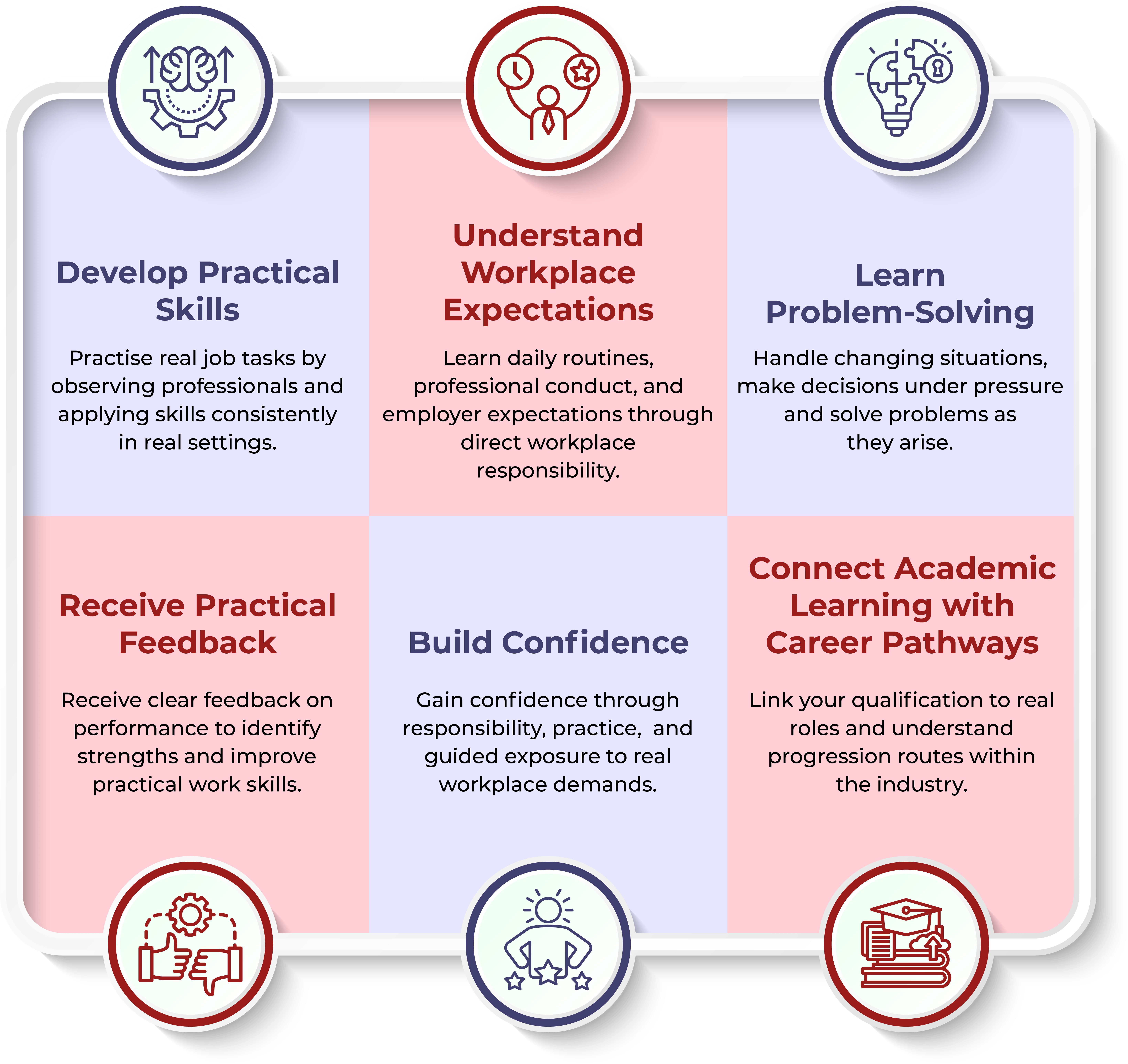
Work placements connect what you study with what actually happens at work. They give you space to test ideas, apply them and see results in real time. Work placement helps in learning through responsibility and practical feedback rather than in isolation.
- Develop Practical Skills
- Work placements let you practise job-specific tasks. In a professional setting, you get to watch experienced professionals, support their work and observe how skills are used properly and consistently. This helps to bridge the gap between written guidance and actual practice.
- Understand Workplace Expectations
- At a placement, you follow routines, manage time and take responsibility for tasks. This exposure teaches professional conduct directly. You learn to communicate clearly, respect boundaries and fit into a workplace culture. You also gain insight into what employers expect, such as reliability, initiative, critical thinking and professional judgement.
- Learn Problem-Solving in Real-Time Situations
- In real workplaces, you face situations that change quickly, which demand strong decision-making skills. You learn how to think critically when plans fall apart or priorities shift. This experience demonstrates how professionals adapt, manage pressure, learn and choose practical solutions. These skills grow through appropriate workplace exposure.
- Receive Practical Feedback from Industry Professionals
- Feedback on a work placement is immediate and specific. Supervisors comment on how you perform tasks, interact with others and handle responsibility. This helps you reflect on your skills and work on areas requiring improvement.
- Connect Academic Learning with Career Pathways
- Work placements help you see where your qualification fits in the job market. You link what you study to actual roles and responsibilities. This clarity supports better career decisions. It also provides information on progression routes and the steps required to advance in the field.
- Build Confidence
- Confidence grows through responsibility. A work placement supports the shift from learner to practitioner by giving you guided exposure to real work. This experience prepares you for employment with greater self-assurance and a more flexible approach. The more you practise in real settings, the more confident and capable you become.
How Work-Placements Help in Qualification to Meet the Occupational Standards?
Work placements play a direct role in meeting occupational standards set by awarding bodies and regulatory bodies. These standards focus on the skills you can use in practice. A placement gives you the chance to demonstrate competence through real tasks carried out in real settings.
During a placement, the work links closely to the skills and responsibilities defined in the qualification criteria. Direct supervisors at work gather evidence from work samples, observe, provide witness testimonies and give appropriate feedback. Evidence may also include reflective accounts, professional discussions, and completed work products. This evidence demonstrates that you consistently meet the required standards, not only in a simulated environment.
Work placements also help assessors judge readiness for the role. They can see how you manage responsibility and respond to workplace demands. This alignment between learning, assessment, practice, and National Occupational Standards ensures that the qualification reflects current occupational needs and prepares you for professional expectations.
- Regulatory, Health & Safety, and Inclusivity Considerations
- Work placements must comply with health and safety regulations and safeguarding policies. Employers are responsible for ensuring learners are adequately supervised and work in a safe environment. Placements must also consider individual learner needs, including disabilities or additional support requirements, ensuring reasonable adjustments are made.
Conclusion
Work placements are a core component of professional qualifications in the UK. They help in practical learning to meet the occupational standards while preparing you for real responsibilities at work. They also enhance employability by giving learners the skills, insight, and readiness that employers expect. You will gain experience, confidence and clarity about your role and career direction. This link between study and practice ensures that professional diplomas remain relevant, credible, and closely aligned with employers' needs and the workplace.