


Confidence in the workplace is built through a mind shift, a blend of preparation, practice, and perseverance. By developing expertise in your field and preparing thoroughly for meetings and presentations, you can feel more secure and capable in your role.
Key Takeaways:
- Confidence in professional settings develops steadily through small actions that reinforce self-belief and competence daily.
- Building supportive workplace relationships enhances self-trust, motivates engagement, and strengthens overall confidence in professional interactions and decision-making.
- Treating mistakes as opportunities to learn, speaking assertively and maintaining composed body language helps sustain long-term confidence and credibility at work.
True confidence at work develops quietly with daily choices, habits and movements. It reveals itself while speaking without rehearsing every word in advance. You would begin contributing by trusting your judgment without seeking prior approval.
Common traits of confident professionals include clear communication, speaking with conviction, maintaining eye contact, and using positive body language, which reinforce confidence outwardly. Many of the highly performative employees in the workplace struggle with this. The gap often sits between ability and self-belief.
This blog will provide practical ways to help rebuild your belief at work.
What Confidence Looks Like at Work?
Confidence at work is fulfilling your role by trusting your own abilities. It includes decision-making skills at work and responding without defensiveness.
Confident employees contribute positively to their work by sharing innovative ideas and accepting feedback openly. It reflects a person's consistency and reliability.
What is the Difference between Confidence and Competence?
Confidence and competence grow together, but they are not the same. Skills give you a foundation. Confidence gives you the nerve to use them. One feeds the other. As your skills sharpen, your self-belief strengthens. As confidence grows, you practise more and learn faster.
| Confidence | Competence |
|---|---|
| Belief in your ability to act and speak | Ability to perform tasks effectively |
| Willingness to participate and take initiative | How well the responsibilities are completed |
| Built through experience and feedback | Built through learning and practice |
| Seen in communication, body language and decision making | Seen in work, results, accuracy and task quality |
| Overconfidence can lead to poor judgment | Low confidence can limit skill visibility and growth |
| Encourages contribution and collaboration | Ensures reliability and effectiveness |
| Builds presence and trust | Builds credibility and performance |
10 Best Ways to Build Confidence in a Professional Setting
Confidence is built through consistent, intentional actions. The following ten strategies focus on daily habits that help you feel secure, capable, and credible in professional environments.
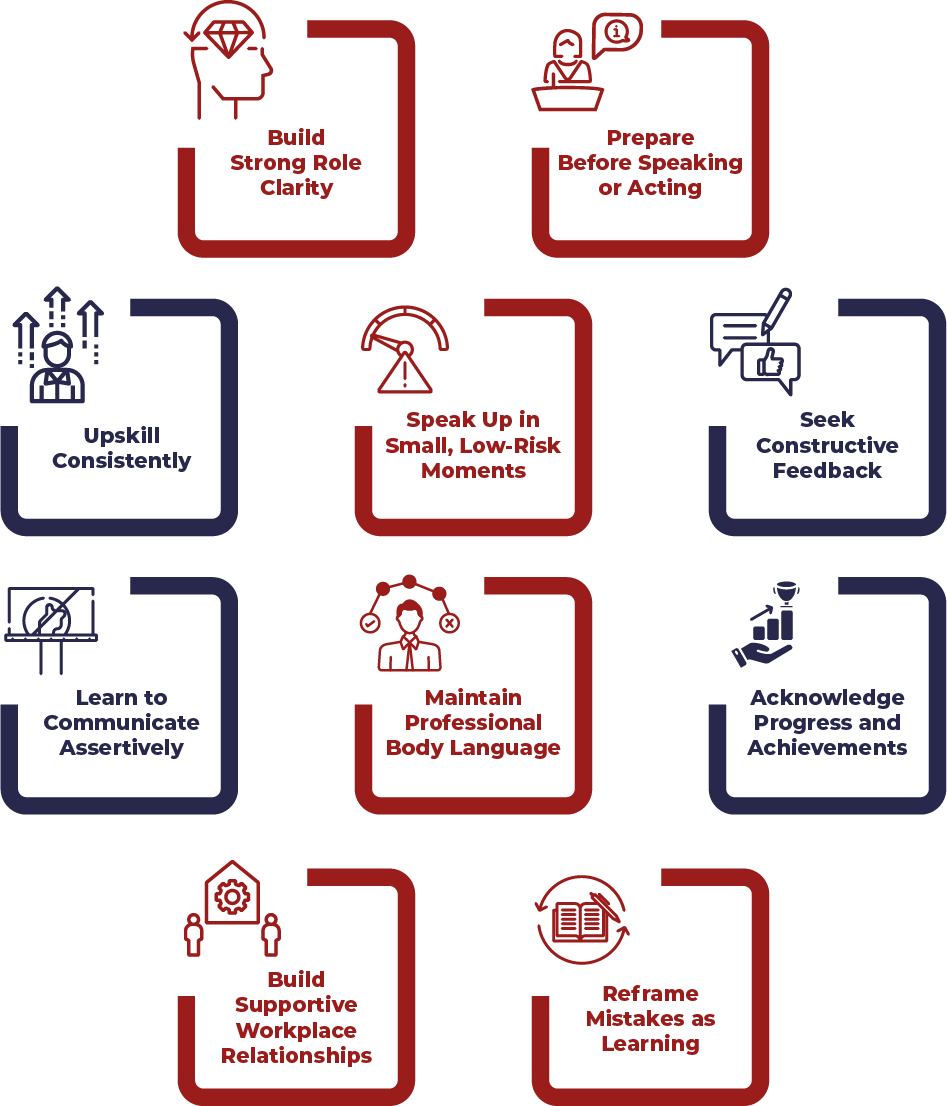
- 1. Build Strong Role Clarity
- Confidence fades when your responsibilities are unclear. Clearly defined duties remove hesitation, clarify decision-making authority, and make daily tasks easier to prioritise. When ownership is clear, there is less room for error and more room for confidence.
- 2. Prepare Before Speaking or Acting
- Taking time to organise your thoughts, anticipate questions, and clarify your goals reduces uncertainty and projects professionalism. Whether in a meeting, presentation, or casual discussion, preparation helps you communicate clearly, avoid mistakes, and build trust with colleagues.
- 3. Upskill Consistently
- Commit to continuous learning through courses, training, mentorship, or hands-on practice. Keeping your skills up to date ensures you stay competitive and capable, which naturally boosts your confidence and professional credibility over time.
- 4. Speak Up in Small, Low-Risk Moments
- Practice contributing in low-pressure settings, like team discussions or asking clarifying questions in meetings. These moments help you get comfortable being heard, refine your delivery, and build confidence for higher-stakes conversations.
- 5. Seek Constructive Feedback
- Proactively ask for feedback to identify blind spots and improve your performance. This shows you are open to growth, adaptable, and committed to excellence. Over time, feedback becomes a tool for progress rather than a source of criticism.
- 6. Learn to Communicate Assertively
- Assertive communication means expressing your thoughts, needs, and boundaries clearly and respectfully. Use confident body language, maintain eye contact, and speak directly yet considerately. This builds mutual respect and helps you navigate disagreements calmly.
- 7. Maintain Professional Body Language
- Your posture, gestures, and eye contact communicate confidence before you speak. Stand tall, avoid fidgeting, and use open body language to appear approachable, composed, and engaged.
- 8. Acknowledge Progress and Achievements
- Celebrate both small wins and major milestones. Recognising progress reinforces a sense of accomplishment, motivates continued effort, and fosters a positive work culture where confidence can grow naturally.
- 9. Build Supportive Workplace Relationships
- Invest in genuine connections with colleagues. Show empathy, offer help, and communicate openly. Supportive relationships reduce stress, encourage collaboration, and create a foundation of trust that bolsters confidence.
- 10. Reframe Mistakes as Learning
- View errors as opportunities to learn and improve, not as failures. This mindset reduces fear, encourages innovation, and builds resilience, key components of long-term confidence.
Conclusion
Building confidence in a professional setting takes consistent effort, reflection, and practice. It grows through preparation, skill development, clear communication, and supportive relationships. By applying these strategies daily, such as acknowledging progress, speaking up, and learning from mistakes, you strengthen self-belief and create a positive impact on your work and those around you. Confidence is built by taking small steps that add up, helping you feel capable, credible and ready to contribute effectively.