


The business world changes with the introduction of new technologies, shifting market demands, increasing competition and global trends. Professionals need to upgrade their knowledge and skills to keep up with the advancement. This makes lifelong learning essential to remain relevant, as initial knowledge and skills will become outdated.
Key Takeaways:
- Lifelong learning is essential for staying relevant, helping professionals adapt to change, grow their skills, and maintain effectiveness in a dynamic environment.
- Continuous learning supports personal and professional growth, enabling individuals to be prepared for opportunities and challenges ahead.
- Organisations and individuals benefit from embracing learning as a habit, building resilience, adaptability, and long-term success in an evolving business world.
- Research consistently shows that employees are more likely to stay with organisations that invest in learning and development, strengthening retention and performance.
- Professionals who engage in continuous learning often see higher earning potential: salaries for junior roles range £22K - £30K, mid-management £35K - £50K, and senior leadership £60K+.
Lifelong learning is an ongoing process of acquiring knowledge, updating skills and adapting to new challenges. By embracing continuous learning, both professionals and businesses can remain competitive, innovative and prepared for the opportunities and challenges of tomorrow. Continuous learning helps individuals stay confident and adaptable, supporting both personal and professional growth. When learning is treated as a continuous habit rather than a one-time achievement, it strengthens both personal careers and organisational success.
How Lifelong Learning Happens in a Business Context?
In business, lifelong learning involves a wide range of activities, including online courses, workshops, mentoring, coaching and self-directed learning. In addition to regulated qualifications, many professionals also strengthen their employability through industry-recognised certifications. These include leadership and management certifications such as ILM, project management qualifications such as project management, and digital skills certifications from providers. These credentials support role-specific competence and demonstrate up-to-date professional capability.
Professionals build new skills, upgrade their knowledge and stay compliant with their roles.
A single course or workshop can address an immediate skill gap, but doing this regularly supports long-term growth. Many professionals now engage in microlearning, short online courses, webinars, and on-demand training to fit learning around work commitments. These flexible learning methods allow individuals to update skills regularly without disrupting productivity, making continuous development more accessible for busy professionals. This cycle must go on.
Organisations that encourage regular learning create a culture where improvement is part of daily work. This helps individuals and teams stay capable, confident and relevant over time.
What are the Rapid Changes Happening in Business World?
The business environment is changing at a pace rarely seen before. Advances in the business world are reshaping the operational strategies of organisations. To remain competitive and relevant, businesses and professionals must recognise these developments and respond through continuous learning and adaptation.
- Digital Transformation: Businesses are increasingly moving toward digital systems to manage operations, communication, customer service, and online service delivery, with cloud platforms, digital collaboration tools, and automation now standard across many industries.
- Artificial Intelligence: AI is changing how tasks are completed, particularly data-heavy work. While some roles are being reshaped, new responsibilities are emerging that require analytical thinking and oversight.
- Changing Skill Demands: Employers now look for a balance between technical knowledge and transferable skills. Communication, problem-solving, adaptability and critical thinking are increasingly valued.
- Remote and Hybrid Working Models: Flexible working arrangements have altered how teams collaborate and manage productivity. This change has increased the need for digital skills and self-management.
- Evolving Customer Expectations: In this era, customers expect quick responses, personalised experiences, convenience and trustworthy service across digital platforms. Professionals must be trained to understand customer behaviour effectively.
- Increased Global Competition: Global markets allow businesses to compete beyond national boundaries. This has put every business under pressure to bring something new to stand out while operating efficiently.
- Regulatory Changes: Rules and regulations are updated frequently across sectors. Businesses must ensure staff remain informed and compliant to avoid risk.
- Data-Driven Decision-Making: Data is now central to business planning and performance tracking. Employees are expected to interpret data and use insights to support decisions.
- Focus on Sustainability and Ethics: Sustainability and ethical responsibility influence business reputation and long-term success. Organisations are expected to act responsibly and transparently.
Start Your Journey Towards a Recognised Business Qualification Today.
click hereto enrol in Level 5 Diploma in Management and Leadership (RQF)What are the Benefits of Lifelong Learning for Professionals?
Lifelong learning supports professionals at every stage of their careers. It helps individuals remain effective as roles, expectations, and industries shift. Rather than reacting to change, continuous learners stay prepared for it.
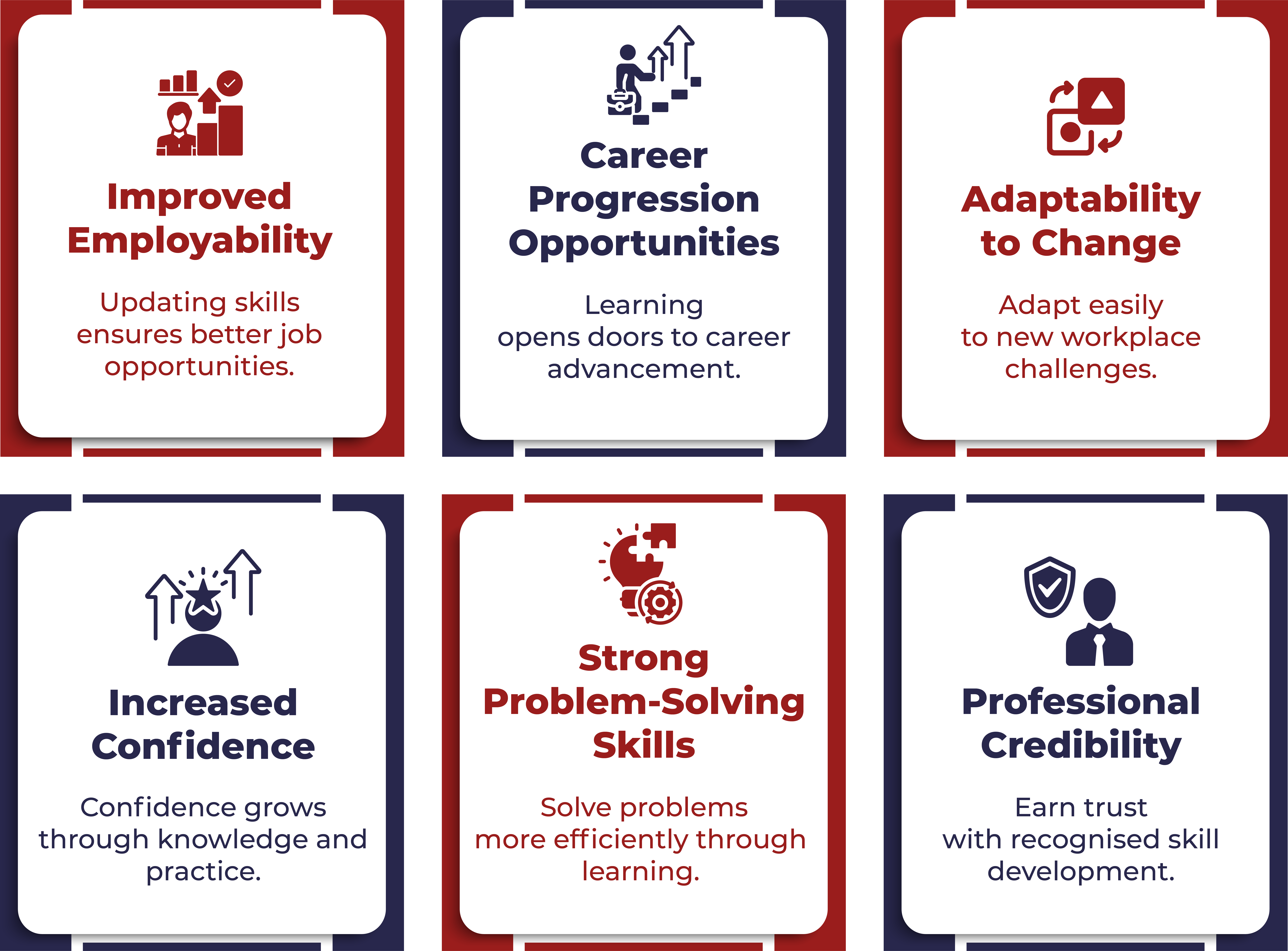
- Improved Employability
- Regular learning keeps professional skills aligned with current workplace demands. Employers value individuals who can adapt and learn independently. Staying updated reduces the risk of skills becoming outdated and makes professionals more competitive. This leads to stronger career security and broader opportunities.
- Career Progression Opportunities
- Lifelong learning creates pathways to promotions and career transitions. Professionals who actively develop skills are often considered for leadership roles. Gaining additional knowledge helps employees handle higher-level challenges confidently. It also signals dedication to personal and organisational growth.
- Adaptability to Change
- Continuous learning helps professionals manage workplace changes with ease. They become more comfortable using new technologies and processes. Adaptable employees handle challenges without stress and maintain productivity. Ongoing learning also promotes creative thinking and flexibility.
- Increased Confidence
- Professionals who learn regularly feel more confident making decisions and sharing ideas. Confidence grows as employees gain competence and experience. It also improves communication and collaboration within teams. Continuous learning supports strong, reliable performance at work.
- Strong Problem-Solving Skills
- Lifelong learning enhances analytical thinking and decision-making. Professionals gain fresh perspectives on challenges and find practical solutions. New skills and knowledge enable them to approach problems creatively. Experience combined with continuous learning allows for better judgment.
- Professional Credibility
- Keeping skills up to date enhances professional reputation. Completing accredited courses, workshops, seminars or CPDs shows commitment to excellence. It demonstrates reliability to employers, colleagues and clients. Consistent learning signals that professionals take their role seriously. Short courses, certifications, and digital learning tools enable professionals to respond quickly to new systems, technologies, and expectations.
💡 Did You Know?
Upskilling Can Grow Your Paycheck! Junior £22k–£30k, Mid £35k–£50k, Senior £60k+
How Businesses Benefit from a Learning Culture?
Businesses that operate on learning culture benefit in multiple ways. Encouraging continuous learning helps retain talented employees and sparks innovation. Upskilling staff improves productivity, reduces skill gaps, increases efficiency and ensures teams' reliability. It also promotes collaboration, creating a more resilient and agile organisation.
In short, a culture of learning strengthens both individual and business performance, ensuring teams remain productive, adaptable, and ready for future challenges.
Conclusion
Lifelong learning is not optional in the fast-changing business world. By continuously updating skills and gaining new knowledge, professionals remain confident, adaptable, efficient and relevant. Businesses that support ongoing learning benefit from productive and innovative teams.
Making learning a regular habit strengthens both individual careers and organisational success. Professionals who commit to continuous learning are more likely to see career growth and higher earning potential.