


A Diploma in Customer Service makes you irreplaceable to employers by equipping you with advanced communication, problem-solving, and relationship-building skills. These skills directly impact customer satisfaction and loyalty. In the current competitive market, businesses thrive on exceptional customer service, and certified professionals stand out as trusted assets. A customer service qualification signals to employers that you are elevating the customer experience.
Key Takeaways:
Customer service qualification helps professionals develop their communication, judgement and professionalism. These are the skills employers rely on when customer relationships are on the line.
Many professionals at the initial level enter customer service without formal training. At a competitive workplace, professional qualifications can be the difference between being replaceable and becoming indispensable.
What is the Strategic Value of Customer Service in Modern Organisations?
In modern organisations, customer service directly affects financial performance, brand perception, and long-term growth. Businesses are starting to acknowledge that service quality influences customer return, retention, recommendations, and departure.
Modern organisations increasingly view customer service as a differentiator. The strategic value of customer service in modern organisations is customer retention, brand perception, revenue growth, strategic differentiation, and operational efficiency.
Customer Retention: High-quality customer service builds trust and strengthens emotional connection. Consistency in service reassures the customers that their needs will continue to be prioritised. Customers will become loyal, which requires less marketing investment. Retaining existing customers is significantly more cost-effective than constantly acquiring new ones.
Brand Perception & Relationship Capital: Every interaction shapes how customers perceive a brand. A prompt response, a professional tone and a solution-focused approach reinforce reliability. Service departments build long-term engagement. Over time, these positive interactions build relationship capital, strengthening brand equity and deepening customer commitment.
Revenue Growth: Satisfied customers are more inclined to return and purchase again. When service teams understand customer preferences and resolve issues effectively, they increase the likelihood of repeat business. Positive service experiences also drive recommendations. This organic promotion supports revenue growth without the high costs associated with traditional advertising.
Strategic Differentiation: In competitive markets where products and pricing are similar, service quality becomes the defining factor. Customers may choose one company over another based solely on how they are treated. This differentiation builds competitive advantage.
Operational Efficiency: Modern customer service strategies increasingly integrate technology such as AI-driven chat systems, automation tools and data analytics. These tools improve response times, reduce operational errors and enhance consistency. Customer interactions also generate feedback. This helps improve products, services, and overall internal processes.
What Skills a Customer Service Qualification Develop?
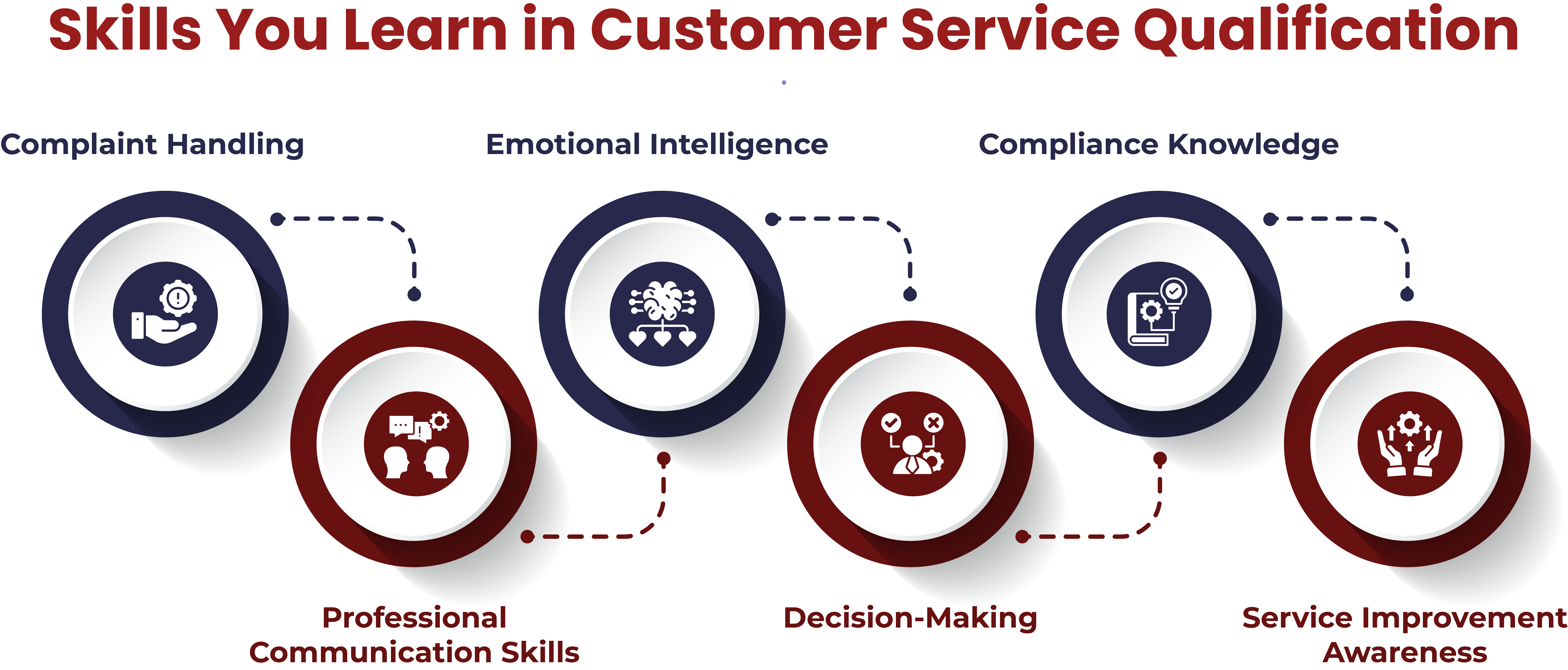
A Customer Service qualification does more than validate your experience. It develops structured, transferable skills that employers rely on in high-pressure and customer-facing environments. Below are the core skills you will typically develop through a recognised Customer Service qualification:
Professional Communication Skills
You learn how to communicate clearly, confidently and respectfully across different channels, including face-to-face, telephone and digital platforms. The qualification strengthens your ability to adjust your tone and manage difficult conversations confidently, while delivering information accurately. It also develops written communication skills, ensuring emails, reports and service documentation reflect professionalism and clarity.
Complaint Handling
Handling complaints requires composure and structure. A qualification teaches you how to manage dissatisfaction without escalating tension. You learn techniques for active listening and solution-focused responses. This skill is critical because unresolved complaints can damage reputation, while well-managed complaints can actually increase customer loyalty.
Emotional Intelligence
You will train your ability to remain calm under pressure. Under this, you will be able to manage personal reactions and respond with empathy while maintaining professional boundaries. Emotional resilience ensures you can handle repeated challenges without compromising service quality or performance.
Decision-Making
A Customer Service qualification develops structured decision-making skills. You learn how to assess situations, identify root causes and select appropriate actions within organisational policies. This improves your confidence in making decisions independently while maintaining accountability.
Service Improvement Awareness
You gain an understanding of customer journey mapping, service standards and performance indicators. This allows you to see beyond individual interactions and contribute to broader service improvement initiatives. Employers value professionals who can identify patterns, suggest improvements and enhance overall customer satisfaction.
Compliance Knowledge
You develop awareness of record-keeping, service documentation, data protection and company procedures. Strong organisational skills support consistency and regulatory compliance. This ensures your work aligns with legal requirements and internal standards, strengthening employer trust.
How a Customer Service Qualification Strengthens Your Employability?
A recognised customer service qualification strengthens employability by providing structured and assessed training.
- Confirms that your customer service competence is structured, assessed and professionally recognised.
- Distinguishes you from candidates relying solely on experience without formal training.
- Shows employers that you value quality, compliance and continuous development.
- Enables you to respond proactively rather than reactively, reducing complaints and increasing satisfaction.
- Equips you to identify inefficiencies and suggest service enhancements.
- Helps you support colleagues, maintain consistent standards and improve overall performance.
- Develops structured decision-making skills, allowing you to resolve issues confidently and independently.
What Career Progression Opportunities can you get in Customer Service Roles?
In the UK, a customer service qualification can open up a wide range of career progression opportunities depending on the level of study, experience, and sector. Here's a breakdown of the typical progression routes:
| Qualification Level | Roles | Progression Opportunities |
|---|---|---|
| Level 1 or 2 | Customer Service Assistant | Move into supervisory roles and gain experience handling complaints, logistics, or product support. |
| Level 3 | Customer Service Supervisor, Team Leader | Progress into specialist roles (complaints handling, quality assurance, travel & tourism, hospitality). |
| Level 4 or 5 | Customer Service Manager, Operations Coordinator | Transition into management positions, overseeing customer service strategy, staff training, and performance. |
Conclusion
Customer service is a strategic asset that shapes reputation, revenue and long-term stability. A Diploma in Customer Service equips you with structured skills, professional judgement and operational awareness that employers depend on in competitive markets. When you combine recognised training with practical competence, you position yourself as more than a frontline employee. You become a trusted contributor to customer loyalty, service improvement and organisational growth, and that is what makes you truly irreplaceable.